Grout
Tile and Grout Cleaning
Grout is porous, so mopping over the years pushes soil into it rather than lifting it out. Cleaning gets that color back by pulling the soil out of the material.
Chapter 01
Grout is porous, and mopping is why it darkens
A mop lifts a portion of the soil off a tile floor and redistributes the rest, and the lowest, most absorbent place it lands is the grout line. That is where it stays.
It happens a shade at a time, so nobody notices the day it got a little darker. What people notice is the year the floor stopped looking clean, because the change was gradual enough to hide.
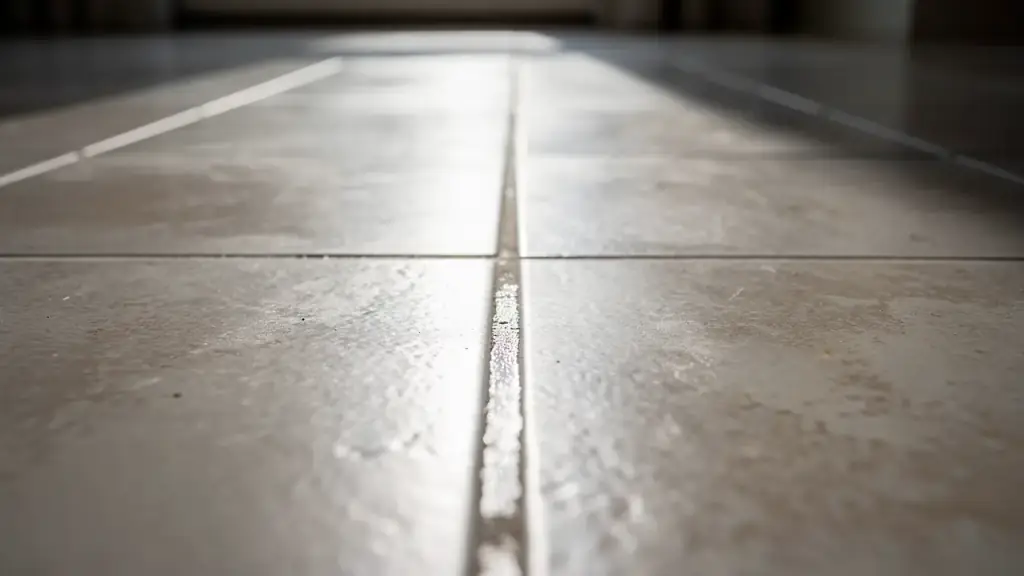
A residential tiled floor in low raking light, one grout line visibly cleaner than the dulled lines beside it
The floor reads dingy even when no tile is dirty
The eye reads the grid across a tile floor, not each tile face on its own. That is why a floor can be visibly clean tile by tile and still look tired overall.
The lines between the tiles are carrying the whole impression. Clean the grout and the same tiles that were already clean suddenly read as a clean floor, because the grid stops dragging the eye down.
Chapter 03
Same principle as carpet, different material
The approach is the same one used on carpet fiber: lift the soil out of the material rather than move it around on top of it.
On grout that means heat, dwell time and extraction, matched to what that particular grout can take without damage. Sealed and unsealed grout do not get treated the same way.
What it will fix, and what it will not
Cleaning restores the color that years of soil have masked. On most floors that is a real, visible change, not a marginal one.
It does not repair cracked or missing grout, and it will not change grout that was simply always that color to begin with. Saying that plainly up front is more useful than promising a transformation the floor cannot actually deliver.
The Carpet Man — Call (469) 446-5685.